 I flipped my radio on this morning and came into the middle of an interview on Morning Edition. The woman being interviewed was speaking about guilt and grief, and it took me a few minutes to realize she was recounting her experience with cancer. Her name is Madhulika Sikka, a Producer for NPR, and she was talking about her new book, A Breast Cancer Alphabet. As I listened, more and more of what she said resonated with my own experience with grief. There are many striking similarities between the anguish that comes from the loss of a child and this dreaded disease. I began to relate this to some of the things I have been experiencing these past eight weeks; things anyone going through such a trauma has probably thought about or will encounter.
Like cancer, a tragedy of this magnitude doesn’t discriminate. It can strike anyone, at any time, without warning or precursor. The result of a cancer diagnosis usually means treatment of some kind, with varying prognoses. The result of the death of one’s child is always, always, anguish, grief and sorrow. There is no chemotherapy for grief. No miracle drugs. No radiation, no procedures, no medical science a doctor can wield. This is what makes grief so terrible; it is untreatable. Each of us has to figure it out within themselves. We can get help, support from friends and family, groups, grief counselors, books, blogs, but ultimately, we are on our own here. Everyone will have their own experience, will react differently, will take longer or shorter to come to grips with it. Nevertheless, there are some universal truths here, somewhere, that apply to any sudden, unexpected chronic condition.
Guilt. Oh, my. How many times have I questioned my actions surrounding his death? Like someone newly diagnosed with cancer, the questions pile up. Should I have eaten better, exercised more? Did this or did that to stave off this illness. I ask the same questions. Is there something I could have done, shouldn’t have done to prevent this. Was it something I did or didn’t do? Should I have done more as a parent, done less, taught him better, left him alone? The thousand and one questions I ask myself daily. The  answer is probably no. Each of us has done what we have done. I did the best I could at the time. In hindsight could I have done things differently? Of course. Would it have changed the outcome? Don’t know. Could I have seen the fork in the road and have guided Jake along the correct path? From the future looking back, perhaps. At each juncture, I encouraged him to take the path I thought best for him at the time, but ultimately, he made his own decisions. In my mind I know “It’s not my fault”, but in my heart I will always question that.
Culture. There is a cancer culture in this country. NFL players don pink shoes and wrist bands for a month, people wear pink ribbons, kids have bake sales, there are walks, runs, workshops, seminars, all designed primarily to raise awareness and promote practices that may result in earlier detection and treatment. The ultimate goal is to save lives. There are support groups for patients, family members and friends of patients, before, during and after treatment. There is a continuing dialog, news about the latest breakthroughs, a new discovery, a promising new procedure. Likewise there is a grief culture. Our ribbons are black, but no one wears our shoes. There are no workshops to encourage early detection; it is nothing you can foresee. There are no tests, no seminars about how to adopt a lifestyle that can reduce the risk. When tragedy hits, it’s too late for all of that. Yes, there are groups, walks, seminars, therapists who can help those afflicted with such anguish, but we don’t really bring it out into the open. There are grief awareness days, weeks and months, but you don’t hear about them on prime time TV. I am new to this community, and am just finding out about such things. We don’t teach how to deal with it in advance; it is usually after the fact. The nasty secret is that no one really likes to talk about or even think about death; it is still mostly a taboo subject. Unless, of course, you are dealing with its aftermath, and then you need to talk about it. You become a member of the terrible club no one wants to join, with a culture all its own.
Strength and Bravery. Both cancer patients and grieving parents are told to ‘be strong’,  ‘be brave’, ‘it gets better with time’. I have had many people tell me I am both strong and brave. Frankly, I don’t feel very strong. Or brave. To the contrary, I feel immensely fragile and weak. I can break down at any time. I have to fight to get out of bed sometimes. I am exhausted all the time. I can usually keep it together enough to get through my day, but I find myself dissolving into tears frequently. I can’t really face a meaningful future yet. Cancer patients are often called warriors, a facet of the cancer culture. Ms. Sikka says she is not a warrior, neither am I. Her take is, by characterizing this as a ‘battle’, if you lose, you can be regarded as not having fought enough, not strong enough. I feel the same way. I am not at war with my grief here. I can never win that fight. Like cancer, there is no cure for grief. Just like a chronic disease, we have to learn to manage our grief, our Chronic Sorrow. It is a lifelong task.
Other’s Expectations. What are you supposed to say to a cancer patient? What do you say to a grieving parent? How do you act? What can you do? I have written about this before, here and here. I don’t want to sound like a broken record, but the worst thing someone can say to a grieving parent is “I know how you feel. My friend’s father/mother/uncle/dog died and they …” There is no comparison, and frankly, I am not in competition with anyone else’s sorrow. My situation is no more or less tragic that someone who lost a father after a long and fruitful life, the parent of a two year old who died of a debilitating illness, the mother of a young adult who committed suicide, the sister of a teenager killed by a drunk driver. No better or worse. Just different. There is nothing anyone can say that makes much difference, even those who have lost children under similar circumstances. Yes, your child died, but he wasn’t my Jake. Our grief is uniquely our own. We can share our stories, we can let each other know that we are not alone in our grief, that we understand, no matter what the other person says or does in their mourning. We can help them with the day-to-day tasks of living, bring a meal, offer to clean their house, drive them somewhere. Quiet, non-judgmental support. That’s about all, but that is often exactly enough.
Our Expectations. How should we feel? What should we do? That is a question each of us has to answer. People have nothing to compare this to. Have no idea of how such calamity will affect them. Should I bravely soldier on, or can I just stay in bed and pull the covers over my head? What is right? We can expect to feel like shit. To look like shit sometimes. We can expect to show our sorrow to everyone we meet without even knowing it. Those who know us can see it, and may ask, “What’s wrong?” Those who don’t know don’t know. We need to learn that we can’t have ‘expectations’. This is uncharted territory, and  however we behave, that’s how we should behave. There is no schedule, no road map, no compass, no protocol, no right or wrong no matter what anyone else says. Different cultures have different ‘norms’ for grieving. Seven days of Shiva. Wear black for a year. Whatever. We need to forge our own norms based on how we feel, what is right for us at any given moment. No one who is in our fellowship of bereavement will find fault with whatever we choose, however we are, whatever we do. Those outside may, but they have no currency in this strange land. They have no idea.
Surviving. People often speak of cancer ‘survivors’. Anyone who has lost a loved one is spoken of surviving. “So and so is survived by …” Survivor is a gross misnomer. You don’t survive such a thing. You can survive a plane crash, a shipwreck, a natural disaster. The implication is that the event is over, and you made it. This event is never over. You don’t survive grief, you don’t survive cancer; you learn how to manage it. I don’t walk around weeping all day; I am managing it to some extent. I expect I will get better as time goes on, but sometimes, just like tonight at dinner, it comes boiling over and pouring out. I can do my best to maintain my composure until I can be alone and let the tears flow, but I will never be free of it. The pool of sorrow will be eternally full; the fountain is always flowing. Sometimes closer to the surface, sometimes a bit more subterranean, but it will always be there. I can relapse at any time, without warning. We never get over it. Ever.
So, do we don our black ribbons and running shoes and Walk for Grief? Do we have  bereavement bake sales? Do we lobby Congress for funding for grief research? Is there even such a thing? Probably not. We have to find our own way through this morass of emotion, this incurable affliction. We depend on the kindness of friends, family, and yes, of strangers. We have to live our lives as best we can; finding what meaning there is in a universe seemingly bereft of meaning. The sun will rise tomorrow, so will you. And so will I.

 don’t exactly apply, but what does, is that grief is the same whatever the loss. No matter what it may be, the pain, the longing, the “wondering what went wrong”, all whirl around like a cyclone transporting us to a new and strange land. It ain’t Kansas, and it ain’t Oz either. It is an odd parallel universe. In the sunlit universe, the one most of us spend our days in, life goes on as usual; errands have to be run, laundry washed, bills paid, the thousand and one mundane details of daily living jostle against one another for recognition. The other, darker universe that exists alongside this one is a realm of the surreal. Where clocks run in reverse, events happen out-of-order, nothing makes sense, and the unspeakable is commonplace. It doesn’t ask for recognition, it demands it.
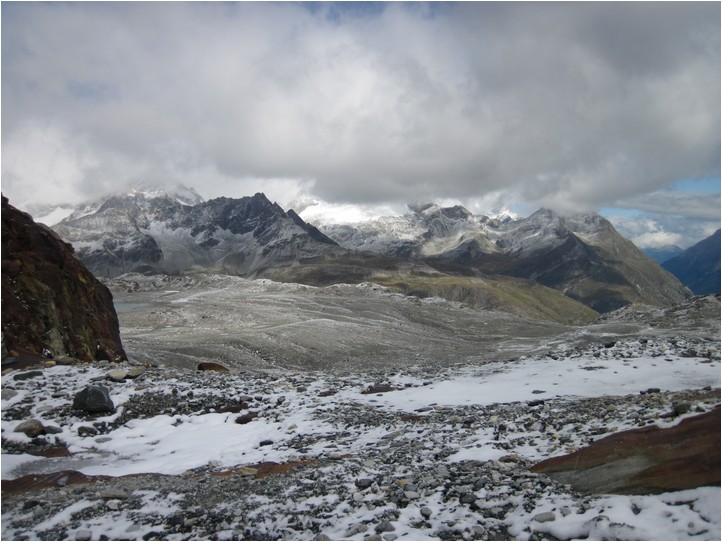 warning, the wormhole opens, and I am sucked into a bleak and inhospitable landscape. Hitherto hidden, it is as real as anyplace. It is a land of unanswered questions, pointless recriminations, staggering sorrow, confusion, bewilderment, and heartache. Mercifully, I am spending less time here there than I did several weeks ago, but knowing it is there, can open suddenly and unexpectedly, throws everything into a different and unsettling light. It casts a shadow on every aspect of life. I live in both universes simultaneously sometimes. Tears and laughter coexist. I smile at a memory as my eyes overflow. Talk about bi-polar.
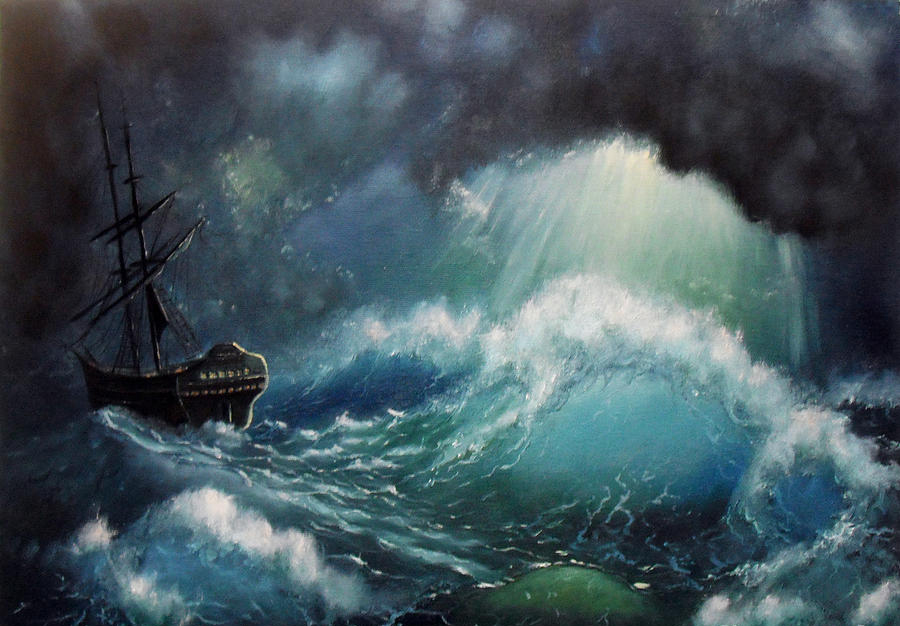 The currents bear me along, inexorably toward an unknown destination. My frail ship rudderless, at the mercy of the stormy waters. I have battened down the hatches, furled the sails, made ready for the storm. The hurricane has already passed, what’s left is the aftermath; the wormy winds that blow capriciously in every direction. Who knows what storms await? I am sure they will strike unbidden and unannounced.











 The Infinite Fountain